


 Germany - Deutsch
 France - Français
 Italy - Italiano
 Spain - Español
 Turkey - Türkçe
 India - English
 South Korea - 한국인
 China - 中文
 Vietnam - Tiếng Việt
India’s food and beverage (F&B) industry is undergoing a significant transformation. Urbanisation, organised retail, e-commerce and demand for convenience and packaged foods are creating new opportunities for manufacturers. At the same time, manufacturers face growing expectations for food safety, consistency, traceability, energy efficiency and flexibility. Manufacturers are therefore turning to automation to build reliable, flexible and scalable production environments.
This evolution is visible across processing, filling, bottling, packaging, material handling and warehousing. Manufacturers are looking beyond standalone machines for integrated solutions connecting production stages. Advanced automation can make a meaningful difference.

- By Mr Anil Kumar, Managing Director, Inovance Technology India
Building Flexible Production Lines
F&B manufacturers often handle multiple products, pack sizes and recipes on the same production line. Frequent product changeovers can reduce productivity when machines require manual adjustment. Automation improves flexibility by coordinating machine functions and storing process parameters digitally.
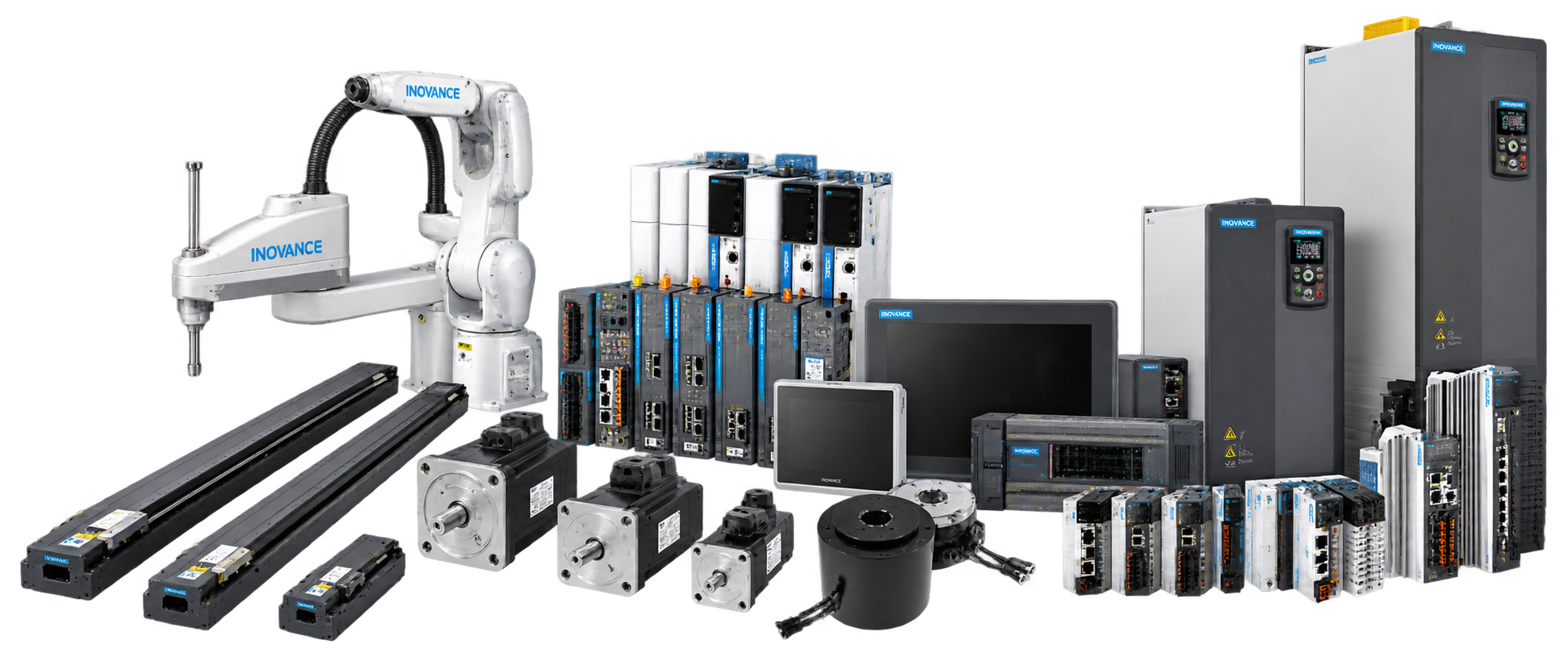
Inovance supports this requirement through an integrated automation portfolio comprising SV630/660/670/680 series servo drives and MS1H series servo motors, MD600, MD520, MD290 series VFDs, AM series motion controllers, EASY Series PLCs, ITS7000 HMIs, I/O systems and robotics. Together, these technologies help machine builders develop flexible equipment that adapts to changing production requirements while maintaining consistent performance.
Improving Speed Without Compromising Precision
High-speed production is valuable only when accuracy and quality are maintained. Applications such as filling, dosing, cutting, sealing, labelling and packaging require precise positioning and synchronisation. In these operations, Inovance servo drives and motors can provide accurate speed, torque and position control.
For example, in a packaging machine, coordinated servo motion can help synchronise feeding, film movement, cutting and sealing. This reduces the possibility of misalignment and inconsistent packaging while allowing machines to operate at higher speeds. This precision is important for manufacturers seeking higher throughput without compromising product quality.
Making Energy Efficiency Part of Production
Energy consumption is another major consideration for F&B manufacturers. Processing plants operate many motors driving conveyors, pumps, mixers, fans and compressors. Running these motors continuously at full speed can result in unnecessary energy consumption.
Inovance Advanced MD630, MD600, MD520, MD290, and MD800 VFDs can help manufacturers match motor speed to actual process requirements. Variable-speed control can reduce energy consumption while enabling smoother starting and stopping, reducing mechanical stress and improving process control. For manufacturers pursuing sustainability, intelligent motor control can support operational and environmental objectives.
From Individual Machines to Connected Processes
Modern food factories require more than individual automated machines. Different processes must work together to maintain production flow. AM3XX, AM5XX series Motion controllers and EASY series PLCs provide the control intelligence needed to coordinate multiple machine functions, while I/O systems connect sensors, actuators and field devices.
Inovance solutions enable coordinated systems where motion, sequencing and machine control work together. Advanced ITS7000 series HMIs provide operators with real-time visibility of machine conditions, production parameters, alarms and recipes. This simplifies operation and troubleshooting while enabling faster response to issues.
Supporting Safer and More Consistent Material Handling
Material movement is another important automation opportunity. Automating repetitive handling of cartons, containers, ingredients and finished products improves consistency and reduces manual dependency.
Inovance industrial robots, including SCARA, six-axis series and Cobots, can support applications such as pick-and-place, packing, sorting, palletising, and machine tending. Robots provide repeatable motion and continuous operation for high-throughput environments. They can also reduce unnecessary manual product contact, supporting hygiene and controlled manufacturing.
Preparing for India’s Expanding F&B Opportunity
India’s expanding consumer market and food-processing ecosystem are encouraging manufacturers to increase capacity and modernise facilities. Export opportunities are increasing the importance of quality standards, consistency and traceability. These trends are driving investment in automated processing and packaging machinery.
For Indian OEMs, automation is also becoming an important differentiator. Customers increasingly expect higher productivity, easy operation, faster changeovers and better energy performance. Integrated automation can help OEMs meet these expectations while reducing engineering complexity.
Inovance Technology aims to contribute to this transformation by bringing together motion control, motor control, machine intelligence, visualisation and robotics within a common automation ecosystem. The focus is on how drives, servos, controllers, HMIs and robots work together to solve production challenges. This approach helps manufacturers balance output, quality, operational efficiency and long-term competitiveness as production requirements continue evolving.
As India’s F&B industry moves toward smarter, more flexible and sustainable manufacturing, automation will play an increasingly important role in determining competitiveness. By enabling precision, productivity, energy optimisation and intelligent operation, integrated automation can help F&B manufacturers build systems ready for India’s next stage of industrial growth.