


 Germany - Deutsch
 France - Français
 Italy - Italiano
 Spain - Español
 Turkey - Türkçe
 India - English
 South Korea - 한국인
 China - 中文
 Vietnam - Tiếng Việt
This article was first published in the February 2026 edition of Thermal Control Magazine

Mr Anil Kumar, Managing Director, Inovance Technology India
The HVACR (Heating, Ventilation, Air Conditioning, and Refrigeration) and MEP (Mechanical, Electrical, and Plumbing) industries are entering a critical phase as sustainability, energy efficiency, and digitalisation redefine how buildings are designed and operated. With energy regulations tightening and carbon reduction becoming a global priority, HVACR systems are expected to deliver high performance while minimising their environmental impact. Inovance Technology continues to support this shift by enabling intelligent, efficient and reliable solutions that help the industry move toward a smarter and greener future.
What is your outlook for the HVACR and MEP industry in 2026?
By 2026, HVACR and MEP systems will be defined by intelligent control, integrated automation, and lifecycle efficiency. Energy regulations and carbon reduction targets will drive the adoption of variable-speed technologies and advanced monitoring systems. Instead of operating at fixed capacities, HVAC equipment will dynamically adapt to real-time demand, improving energy utilisation and reducing emissions.
Inovance foresees increasing demand for high-efficiency drives, compressor-specific control solutions, and medium-voltage systems that support large and complex HVAC infrastructures across commercial, industrial, and institutional buildings.
Which innovations are shaping the future of smarter and greener cooling solutions in the HVACR industry?
The future of cooling lies in systems that deliver high performance while consuming less energy. Advanced inverter technology and intelligent control platforms enable HVAC equipment to operate more efficiently across varying load conditions.
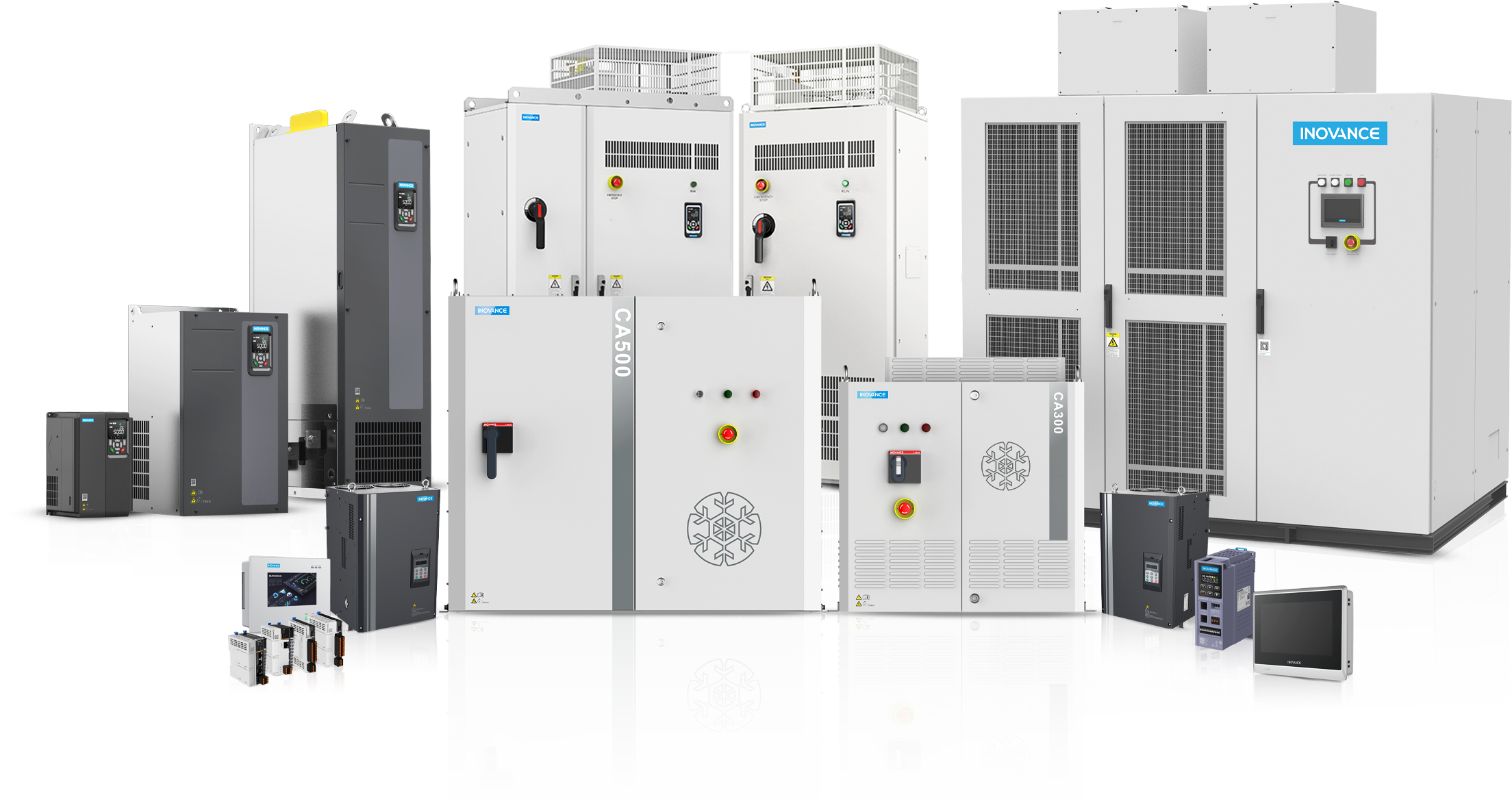
Inovance’s CA300 and CA500 series compact inverters play a crucial role in this transition by enabling precise motor speed control in chillers, pumps, and condenser fans. By matching motor output with actual cooling demand, these inverters significantly reduce energy losses, improve system stability, and enhance overall cooling efficiency—especially during partial-load operation, where HVAC systems spend most of their operating time.
How can smart HVAC systems and monitoring equipment improve energy efficiency and reduce carbon footprints?
Smart HVAC systems improve energy efficiency and reduce carbon footprints by continuously monitoring operating conditions and adjusting performance in real time. With Inovance’s intelligent drives and automation solutions, HVAC equipment responds precisely to changes in load and ambient conditions, allowing motors, fans, and compressors to operate at optimal speeds rather than maximum capacity. This adaptive control significantly reduces energy consumption and peak power demand while improving system efficiency and reliability. As a result, greenhouse gas emissions are lowered, helping building owners meet sustainability goals, reduce operating costs, and comply with energy efficiency standards.
In what ways can MEP strategies address the challenges in achieving carbon-neutral HVAC systems?
MEP strategies support carbon-neutral HVAC systems by integrating energy-efficient equipment with intelligent control and coordinated system design. Solutions such as Inovance’s CP700 air compressor drive enable compressors to operate smoothly based on real-time demand, reducing energy consumption, mechanical stress, and inefficiencies caused by constant-speed operation. Intelligent monitoring and predictive diagnostics further improve reliability and minimise downtime. By enabling variable-speed operation, optimising energy use across HVAC components, and extending equipment life, Inovance drive and automation solutions help MEP designers reduce overall environmental impact and achieve energy-efficient, sustainable HVAC systems.
How is AI managing MEP for optimising HVAC performance?
Artificial Intelligence is increasingly shaping how HVAC systems are monitored and controlled. AI-driven platforms analyse operational data to predict demand patterns, detect anomalies, and recommend optimisation strategies. Inovance products are designed to integrate seamlessly with intelligent building management and analytics platforms. This enables HVAC systems to evolve from reactive operation to predictive and adaptive performance—maximising energy savings while maintaining occupant comfort.
Which HVACR and MEP innovations are driving smarter and greener buildings?
HVACR and MEP innovations driving smarter and greener buildings focus on intelligent control, system integration, and energy optimisation. Large-scale HVAC applications such as district cooling plants, data centres, and industrial facilities increasingly rely on robust power control solutions like Inovance’s HD9XS medium-voltage AC drives, which ensure stable and efficient operation under fluctuating grid conditions and varying motor loads. By supporting high-capacity motors and maintaining system stability, these solutions enhance the efficiency and reliability of centralised HVAC systems, where performance losses can lead to significant energy waste and environmental impact. Alongside this, variable-speed drive technology, intelligent automation and monitoring, and data-driven energy management are enabling HVACR and MEP systems to operate as connected, optimised ecosystems. Inovance’s portfolio provides a strong foundation for these innovations, helping buildings achieve higher efficiency, reduced emissions, and smarter overall operation.
What skills will define the next generation of HVACR and MEP professionals?
As HVACR and MEP systems become more intelligent, professionals must combine traditional engineering expertise with digital and analytical skills. Future-ready professionals will need a strong understanding of automation, energy optimisation, and system integration to manage increasingly complex building environments.
According to you, what new developments are likely to build a better future?
Looking ahead, the HVACR and MEP industries will continue their shift toward intelligent, low-carbon solutions. Autonomous control, predictive maintenance, and integrated energy management will define the next generation of building systems.
Inovance Technology remains committed to enabling this future by delivering innovative drive and automation solutions that help customers build smarter, greener, and more resilient HVACR and MEP systems.